
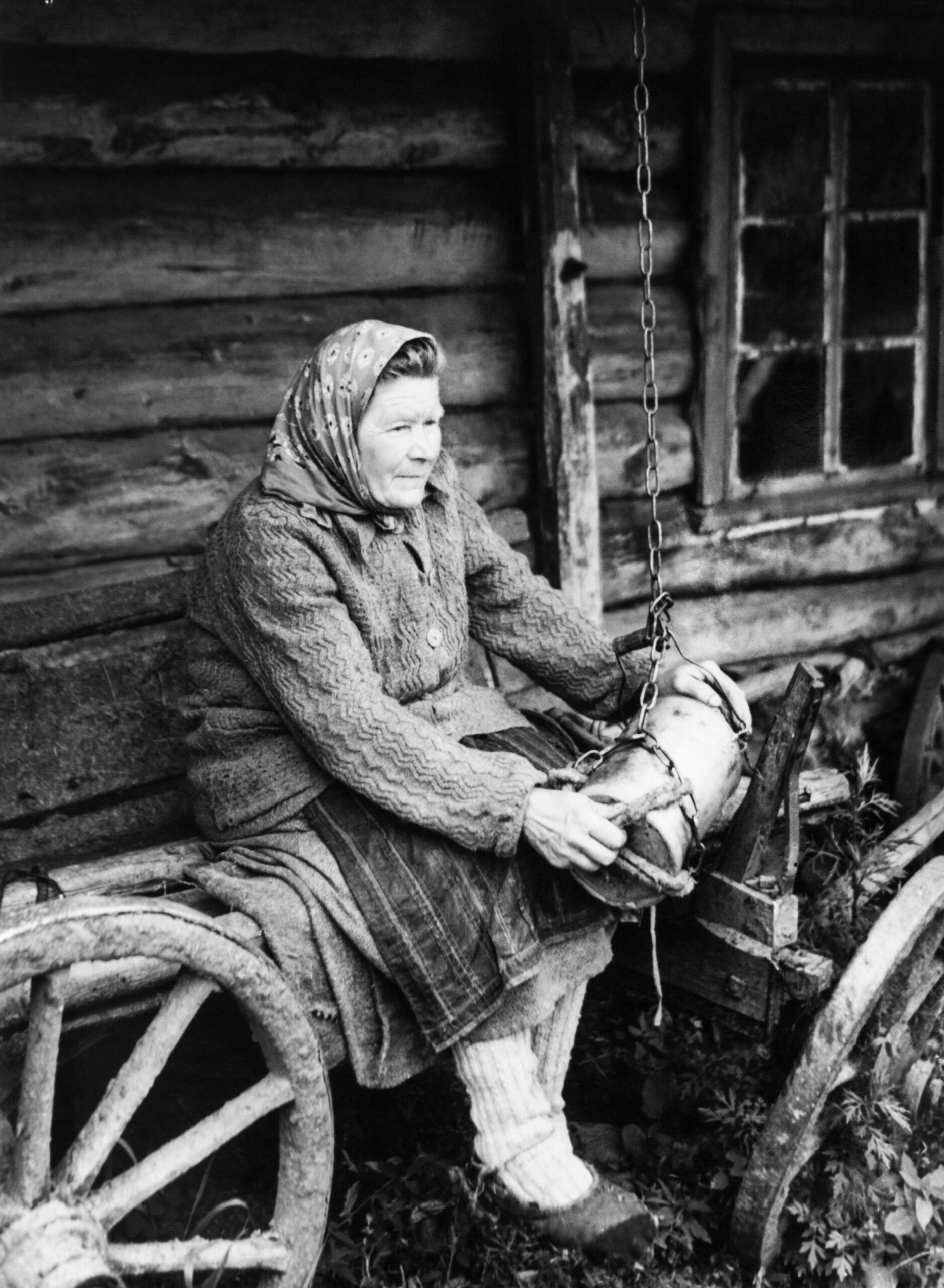
Back when the grass was greener and the dandelions yellower, and children running around the pasture sometimes thought to find out which of them ate the most butter
was, a dandelion flower had to be held very close beneath each child’s chin in turn. Whoever’s chin reflected the most yellow was the winner. Where this custom came from,
I do not know, but I think it was English children who played the same game to guess which of them would have the most gold in the future. Perhaps Estonian butter has always been our pure gold.
Butter export revenues helped pay off the debts of the Estonian War of Independence and bring prosperity to Estonian farms. The Republic of Estonia also encouraged butter production, laying the foundations for systematic dairy education in Õisu and supporting research.
The journal Piimandus, founded by Õisu Dairy School in 1928 and later jointly published by Õisu Dairy Institute and the Chamber of Dairymen, featured
regular reports on butter producers’ successes and failures almost as consistently as today’s record sales charts or television audience rankings. Estonian butter remained on our tables during the Soviet era too, although jokers at the time shared tips on how to spread butter on bread without getting water splashed in their eyes.
Meanwhile, butter fell on hard times in the West when, in the 1950s, ambitious American scientist Ancel Keys, drawing on health data from seven countries
and his analysis of them, claimed that animal fats, including butter, were responsible for heart disease. In 1961, his theory gained the support of the American
Heart Association, and in 1977 the US government published its official position that butter, like animal fats in general, harms heart health. After that, much of affluent society converted to margarine for a full half-century. Scientists in Europe tried to challenge this, and butter remained an important food at least for the French, Danes and other major European butter consumers. It was not until 2000 that US nutrition expert Ronald M Krauss risked his scientific career by re-examining Keys’s claims. A group of Cambridge and Harvard researchers did the same, and in 2010 Keys’s theory was definitively refuted, demonstrating that his study had been one-sided and its sample biased. Butter’s reputation as a healthy food was restored, and the United States in particular has now seen an unprecedented boom in butter consumption. Butter has once again become a highly valued export commodity, with Ireland’s dairy sector, steeped in tradition, seemingly benefiting most so far: its butter exports exceeded 1 billion euros for the first time in 2018.
Did you know?
1819 232 leisikas, or approximately 2 tonnes, of butter are exported through the port of Kuressaare.
1878 De Laval invents the separator – a cream separator
1892 The first cream separator at Maasi Manor
1924 8,9 tonnes of butter are produced on Saaremaa.
1930 520 tonnes of butter are produced on Saaremaa.
1932 Pihtla Piimaühing becomes the first winner of the Saaremaa butter competition’s challenge trophy – Tavast’s silver jug.
1933 A national trademark for the exterior of butter barrels is registered in the name of the Estonian Ministry of Agriculture.
1945 70 tonnes of butter are produced on Saaremaa.
1954 Mihkel Koel from Pihtla receives all-Union recognition and the honorary title of Chief Butter Master
1969 Kuressaare Dairy is Estonia’s largest butter producer
1970 1586 tonnes of butter are produced on Saaremaa.
1972 At the all-Union butter competition, cultured butter made in Kuressaare is recognised as the best in the USSR.
1988 Saaremaa has a record year for butter production – 2339 tonnes.
2012 A new butter production unit begins operating, becoming the first in Estonia to make sweet cream butter with salt crystals
2013 Saaremaa butter and butter with salt crystals receive the Approved Estonian Taste label, also known as the swallow label.