Text and photos by Siiri Soosaar
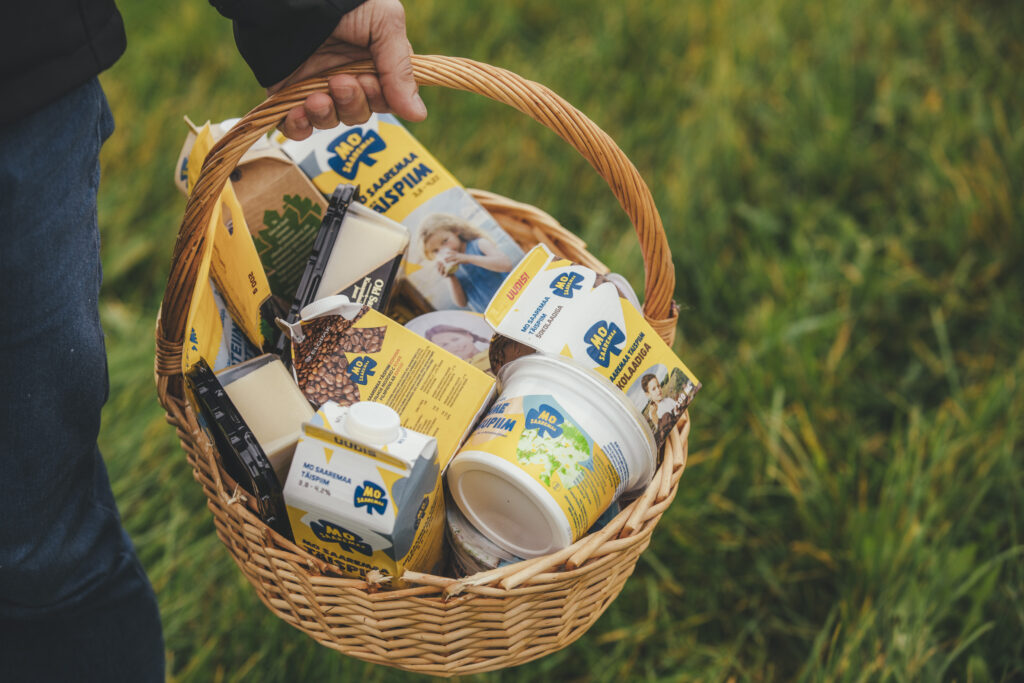
Saaremaa is known for its mild maritime climate, abundant orchids, rally drivers and windmills. The ingredients grown by Saaremaa farmers and the food made from them are also valued throughout Estonia. In Kärla, Ülar Tänak runs a large dairy farm with nearly 2000 animals, whose milk is used to make Mo Saaremaa products. Ülar started working at the farm back in 1994, when the opportunity arose to manage the Kärla agricultural cooperative with its 150 animals. He has always enjoyed keeping animals and farm work, so he gladly seized the opportunity. Over the years, the herd kept growing, and a large free-stall barn was built in 2005. For a time, the dairy farm belonged to foreign investors, but since December 2019 it has been entirely in the Tänak family's hands. “I have spent over 20 years on this farm. My children grew up here. This farm is our home, and I cannot imagine myself anywhere else,” says Ülar, adding that the family decided together to buy out the investors and start running a business of their very own.
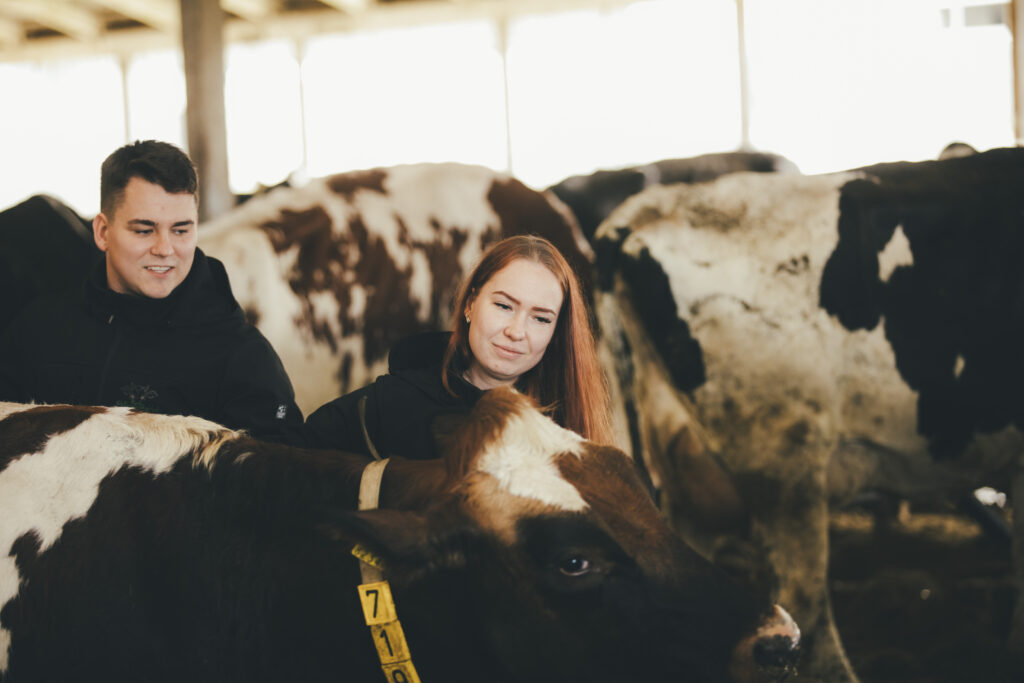
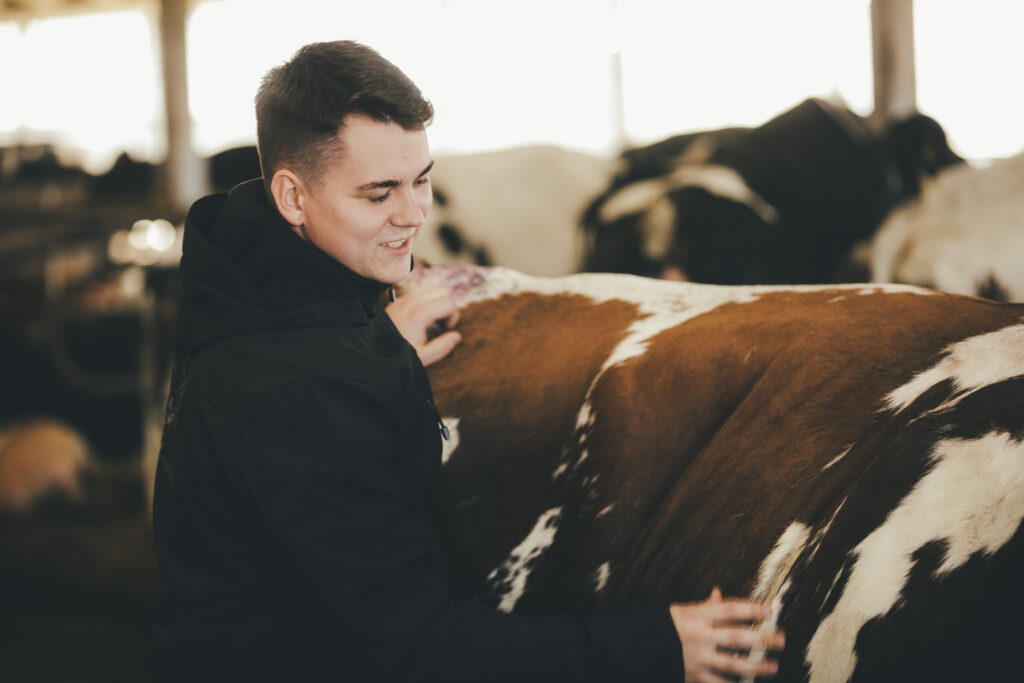
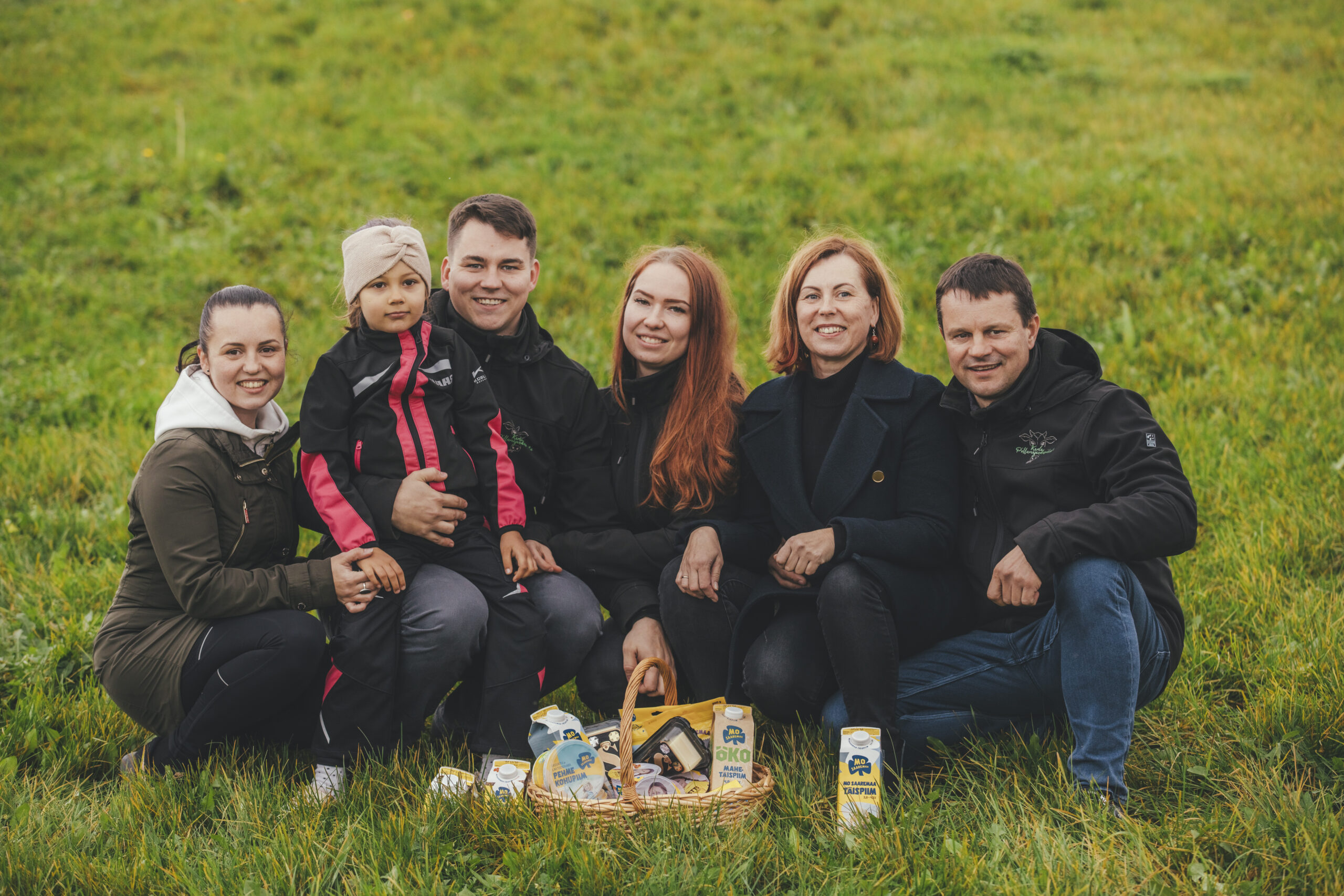
Working alongside Ülar on the farm is his son Janar, who first joined his father at work in the barn at the age of 5. His strong desire to work with animals also played a part in his choice of career. Today, Janar, who holds a master's degree in animal husbandry from the Estonian University of Life Sciences, is responsible for the herd. He is assisted by his partner Triin, who has the same qualifications. The family's daughter handles payroll, while the mother manages personnel.
Besides the family, the farm employs nearly 40 people, mainly locals. “We want to support the local community and offer work to anyone interested. Working on a farm is enjoyable and rewarding,” adds the owner. He says it is also a rapidly developing sector where there will certainly never be a shortage of work — all you need is the willingness to work. His son knows that the routine tasks are sometimes punctuated by lively adventures. He recalls a day last summer when the heifers escaped from their enclosure. They searched for hours, finding only scattered tracks here and there. Just as their strength was running out, they found the entire herd wandering together in a dense forest.
Efficiency is the key to success
Throughout his long career, Ülar has never needed an alarm clock. “I get up happily every early morning because I get to do what I enjoy most — work with animals,” says Ülar, adding that no two days in animal husbandry are ever the same. As technology changes, so does the work, bringing new challenges and achievements. It is also exciting to see innovations and changes improve animal welfare every day and make the work more efficient and better. “Like it or not, we live in a world where efficiency is the key to success,” he says. Technology enables us to assess our work better and make it more modern and profitable, simply to survive under the market's current pricing policies.
The main aim of improvements is animal welfare. The better an animal feels, the higher the quality of its milk. To this end, the barn has large fans to provide the animals with more fresh air. Mats are used in their stalls to make lying down more comfortable, and feed quality is constantly monitored. The barn also has a manure separator. “Whereas we previously used only expensive sawdust and wood shavings as bedding, we now have a very environmentally minded machine in the barn that presses excess water out of the manure and dries the remaining material. What remains is a crumbly, partially dried manure that is used as bedding for the animals,” explains the owner. This is genuine recycling, and the animals themselves benefit the most.
Developing the milking parlour is an important part of the work, ensuring that it is a pleasant and comfortable place for both the animals and the milkers. For example, udder cleaning before milking has been mechanised, and a teat-disinfection machine will be added at the end of the year, taking over a task still performed by a person.
A happy herd produces more milk
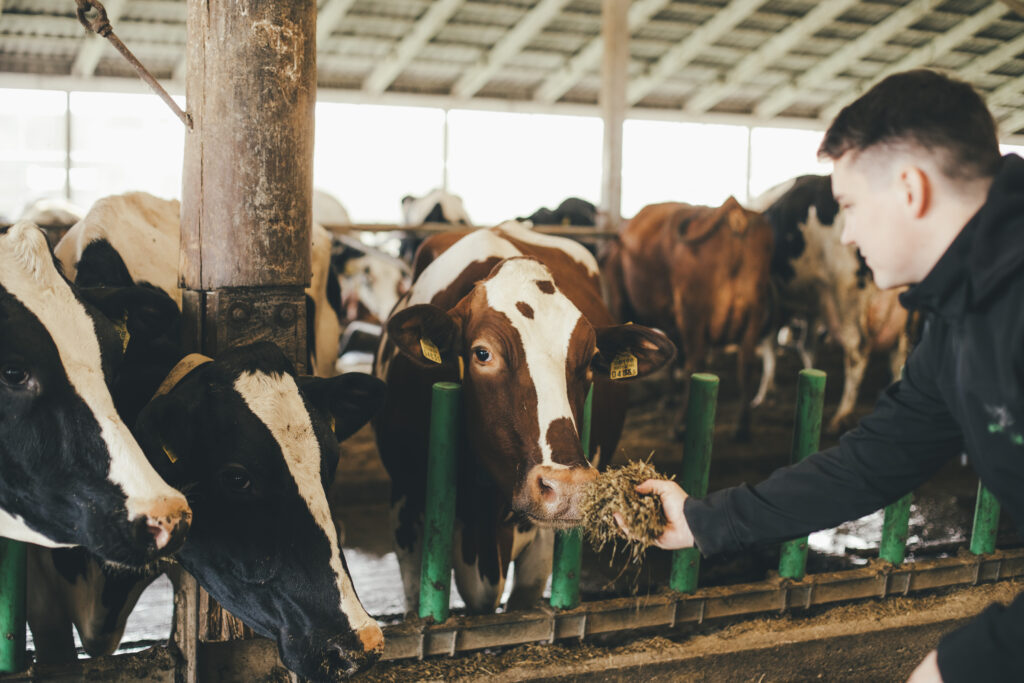
The farm's dairy herd has 920 cows, of which nearly 800 are being milked. The main breed is the classic black-and-white Estonian Holstein, but the herd also includes Estonian Red cattle. Janar spends most of his day with the animals in the barn. Over the course of his life, he has tried every job in the barn and knows exactly how to care for the herd. His main daily focus now is increasing milk output, so he carefully monitors feed quantities, the animals' feed intake and the composition of the feed. He makes the necessary adjustments according to milk quality. In short, Janar believes the aim of his work is to keep the herd healthy and the animals happy — then the herd will also produce more milk.
The milking carousel
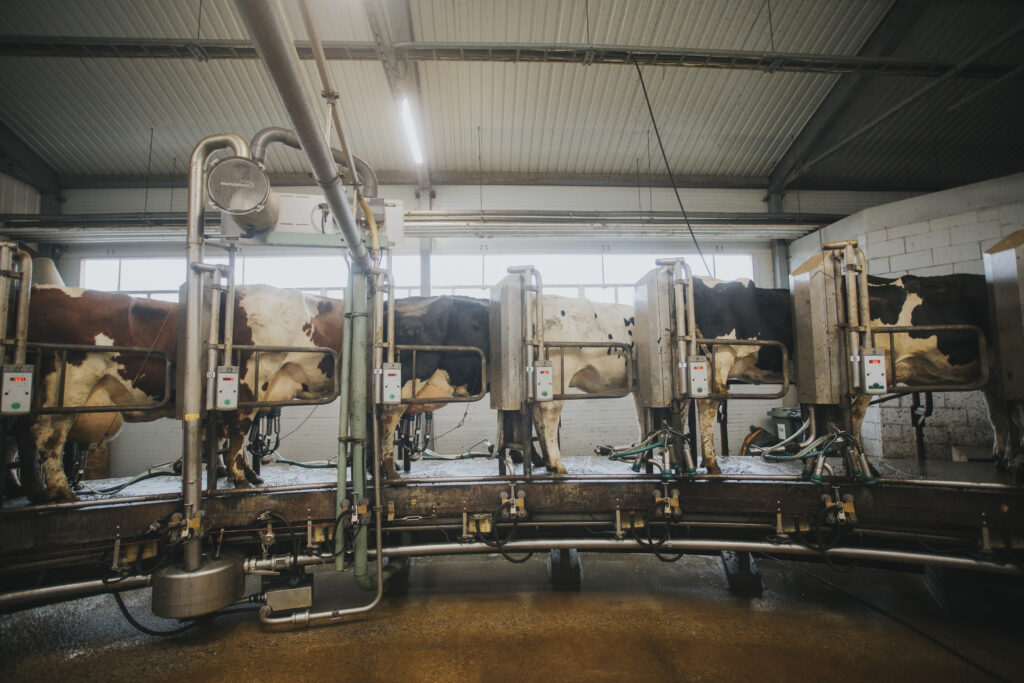
A 32-stall rotary milking parlour is used to milk the substantial dairy herd. Ülar first saw one in Germany. He particularly appreciates its reliability and efficiency. It is quiet and runs at a gentle pace that suits both the animals and the milkers. The carousel milks an average of 150 animals an hour. Currently, all the animals are milked three times a day, and each milking session lasts 6–7 hours.
“Life on a farm in Saaremaa means you have to know how to do most things yourself, because help is not so easy to come by,” says the family's son. He recalls an incident in spring when the milking carousel broke down at night while the whole island was in lockdown and the technician lived on the mainland. The cows were stuck on the carousel and began falling asleep. So they used a tractor to pull the carousel into motion and let the animals off. They took the broken motor apart and repaired it themselves so that milking could continue until the technician arrived.
25 tonnes of white gold a day
Milk volumes are currently lower than usual because of calving. “Every day we send 25 tonnes of milk to the dairy, which is less than we would like,” notes Ülar. In summer, milk volumes are more impressive, with 29–30 tonnes of rich local milk sent to Saaremaa Piimatööstus every day, making the farm one of the largest suppliers to the Mo Saaremaa dairy.
In the near future, Ülar would like to build an even larger barn for the animals, but he admits that this wish will have to wait a little longer. There is also a limit to how much they can expand, as the available land sets boundaries. One thing is certain, though — the entire Tänak family sees its future right here, doing exactly the same work.