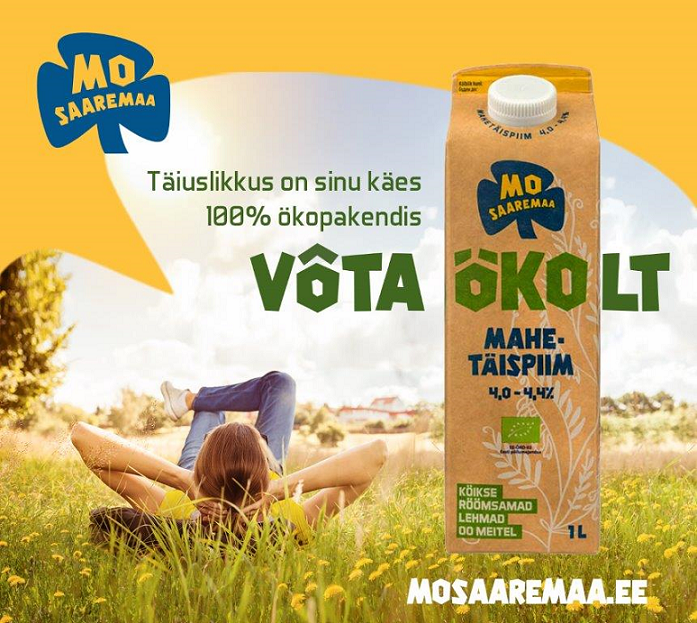
Due to the increased volume of raw milk and its falling price on the world market, Saaremaa Piimatööstus can offer organic milk at a lower price for the summer to retail chains and, hopefully, to consumers as well. The company believes that the entire chain should benefit from the lower price – from producers to milk drinkers.
According to Valdis Noppel, head of Saaremaa Piimatööstus, as a cooperative production company they have a social responsibility to process and add value to all the raw milk collected on Hiiumaa, Saaremaa and Muhu. The islands’ organic milk producers are dedicated and keep pace with market trends, constantly increasing the production volume of Mo Saaremaa organic milk, but they must also take changes in the world market into account. “Although the number of litres is growing, the price of raw milk has fallen. We want the entire chain to be included in the changes and market developments to reach end consumers. We are therefore lowering the price of our organic milk for retail chains,” said Noppel.
The head of Saaremaa Piimatööstus hopes that end consumers, who have also become more price-sensitive due to the crisis, will benefit from the price reduction. “We want organic milk to be accessible to everyone in Estonia despite the difficult times. This is how we support our dedicated farmers producing raw milk on Hiiumaa, Saaremaa and Muhu, as well as more price-sensitive consumers,” Noppel added. “Unfortunately, we see that Saaremaa dairy products are hard to spot in some retail chains. Hopefully, the price reduction will also lead to better product displays in the future.”
Mo Saaremaa organic milk comes from organic producers on Saaremaa and Hiiumaa. Every buyer therefore helps preserve the unique way of life on Estonia’s islands and provides work for local farmers.
Saaremaa Piimatööstus is a dairy company with extensive experience and long-standing traditions, owned by dairy farmers from Saaremaa, Hiiumaa and Muhu. The company’s main activities are buying milk and making cheese and butter. Milk production, sales and logistics involveapproximately500 people, most of whom live on the islands.