Text and photos: Kristi Hürri
Never have so many people travelled to Hiiumaa as last summer. More and more people are finding their way here to enjoy the peace, quiet and special feeling this magical island offers. Hiiumaa’s charm lies in its pristine, unspoilt nature, which abounds in this area that is part of UNESCO’s biosphere programme. All this has created excellent conditions for organic farming – this is where Saaremaa Piimatööstus collects its organic milk. Milk from the islands is special in general. For example, there are no moles here whose molehills inevitably introduce soil and bacteria into silage bales when grass is mown. As a result, animal feed produced on the islands is cleaner and the milk tastes better. The Island of the Day (Dagö) also enjoys plenty of sunshine, which is said to make the milk richer in vitamin D. Animals here mostly graze on species-rich wooded meadows, which also add value to their feed.
One of Hiiumaa’s larger organic milk producers is Mati Vallikivi, who is approaching 70, together with his son Martin. They have supplied milk to Saaremaa Piimatööstus for decades. Two years ago, the family business made a bold investment and built an ultra-modern organic cowshed in southern Hiiumaa, with every comfort for its inhabitants. Männaka OÜ is now led by three generations of men – Mati, his son Martin and his grandson Mikk. Nor are 5-year-old Heleen and 10-month-old Jasper left out of the activities.
Hiiumaa’s dairy farmers – a dying breed?
Mati Vallikivi, who has lived on Estonia’s second-largest island for almost 70 years, says that Hiiumaa once had a great many dairy farmers and even a local dairy. “In 1993, there were 92 of us on the island; now only six remain, and even their future is no longer certain in the current situation. Low milk prices and the loss of subsidies could end badly for quite a few farms,” Mati reflects. The global market has kept milk prices low for years, at times making life very difficult for producers, as costs keep rising while revenues tend to fall. Membership of the cooperative provides steady work. Saaremaa Piimatööstus, owned by Saaremaa Piimaühistu and located on the neighbouring island, collects the cooperative members’ milk and processes it into value-added products. “At 22.30, the milk tanker arrives, empties the tanks, then makes its rounds to Kaigutsi, Palade and Suuremõisa before taking the morning ferry to Saaremaa.” Milk is the Vallikivi family’s largest source of income. In addition to keeping dairy cattle, they grow organic oats, rapeseed, wheat and barley. Meat production accounts for a very small share.
Around animals since birth
Mati and his family have been involved in animal husbandry since childhood. “I remember being 8 and my brother six when we looked after a herd of nearly 200 calves. I don’t know how we managed to keep an eye on them, but we did,” he recalls.
In his younger days, Mati was a driver on a collective farm, and when he was handed his employment record book, he could think of nothing else to do but start keeping livestock himself. “In 1995, I moved into the old cowshed next door with 12 cows, and that has now grown into a dairy herd of 200. They are all beautiful black-and-white cows,” says Mati. His son Martin, too, has accompanied his father to work since he was a baby. “He was 2.5 years old when he started coming along on tractor rides with me. He still had a feeding bottle in his hand, but insisted on coming,” Mati recalls. His grandson Mikk began riding along on the combine harvester at just 5 and learned to drive a tractor at 8. “Children need to be involved in farm work from an early age, because if they only get on a tractor as adults, it is already too late and the interest has gone,” says Mati, who knows the secret to becoming a farmer. Mikk has grown up around the farm and will hopefully take over from his father Martin one day. Of course, Martin is not forcing the business on his son. “It is more a matter of his own choice,” he says. “He could also spend two or three years travelling the world, perhaps living in Australia,” Martin muses.
A state-of-the-art cowshed
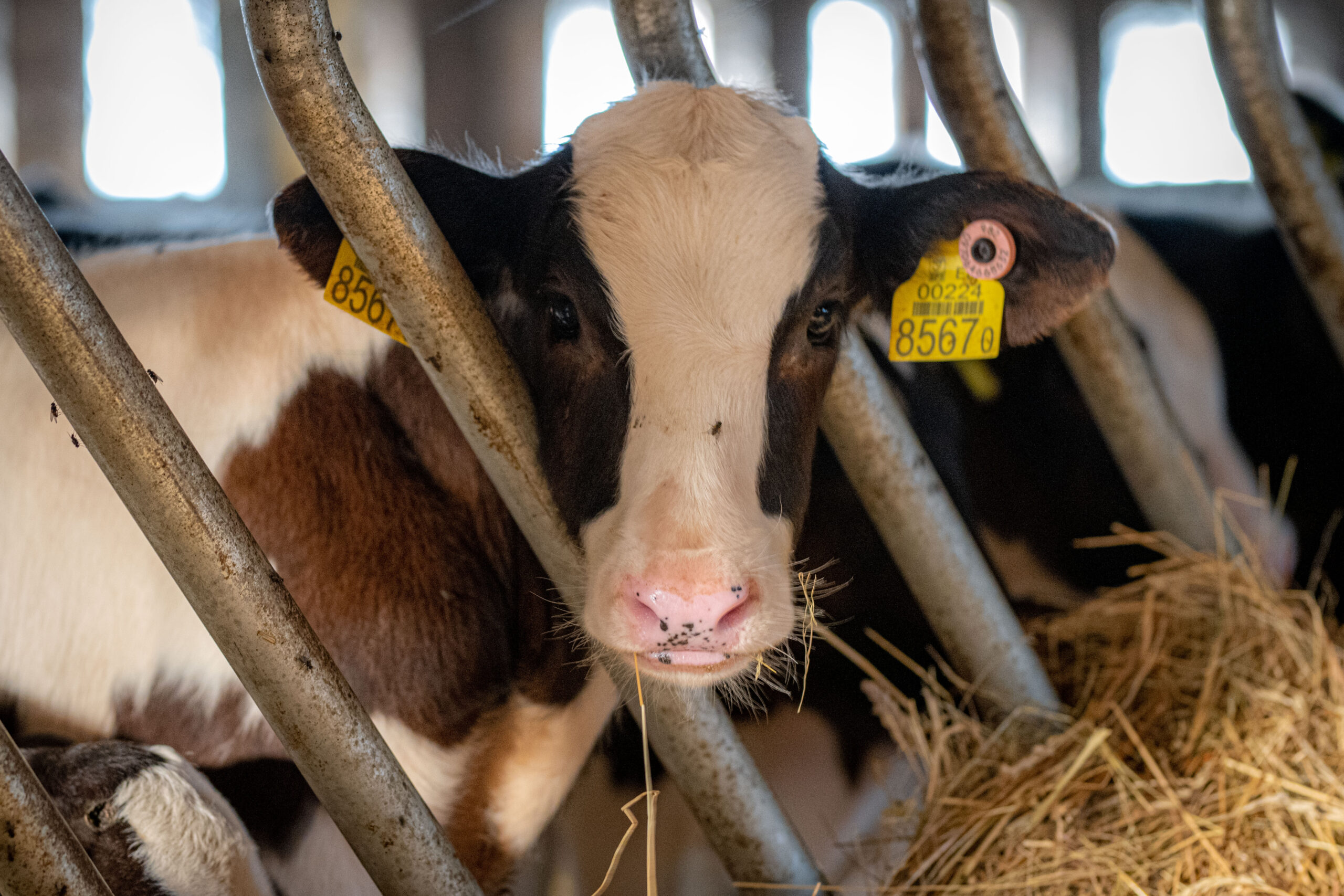
Saaremaa Piimatööstus also praises Mati as a spirited, hard-working and enterprising man. He has the distinctive way of speaking, stubbornness, initiative and, of course, sense of humour typical of Hiiumaa islanders – without which work like this would be difficult indeed. His major investment a couple of years ago in building Hiiumaa’s most modern dairy farm (perhaps even Estonia’s) is all the more worthy of recognition. The modern, fully automated cowshed provides good living conditions and comforts for the animals – they sleep when they want, eat when they want, scratch themselves when they want and go for milking whenever they choose. “My cows are organic, so they are not tethered and can also move freely outdoors,” Mati explains. A special chip attached to each cow’s ear directs her to milking at the right time and knows precisely when to turn her away if it is not yet her time.
The modern cowshed does not require as much human labour as before, either. “Working in the new cowshed is certainly less physically demanding, because a robot delivers the feed and cleaning beneath the animals is fully automated,” says Mati, comparing it with the previous workload. Even the heating is free, so to speak, as the farm’s staff rooms and water are heated by “milk heating”, using the energy recovered from cooling the milk. “What efficiency!” Mati says proudly.
There are currently 200 animals in the cowshed, although it could easily accommodate 258. “At the moment, some of the cows are out on pasture with a bull. We expect calves from them in early October. There is a very large loan on the cowshed, so I try to keep the building operating as close to full capacity as possible.”
Organic milk is the only right choice
Although organic milk costs more to produce than conventional milk, Mati sees no other option. “I have never wanted to put pesticides or fertiliser on grain or feed crops, and I will not start doing so in the future,” Mati insists. All this makes organic milk production many times more expensive. By comparison, while a tonne of conventional feed costs about 200 euros, a tonne of organic feed costs around 400 euros. Mati does use fertiliser – slurry from his own organically raised animals. His business has nearly 1,000 hectares of land in total, where he grows oats, rapeseed, wheat, barley and grass for hay – all organically, of course. Some goes into animal feed and some is sold, but the main source of income remains organic milk, of which the farm produces about three tonnes a day.
Mati does not sell milk at the barn. He says it would involve too much hassle and extra work. “If someone asks, I tell them they can buy Mo Saaremaa Öko organic milk at the shop — that is my milk,” he chuckles. The standards for milk from Mati’s farm are very high, and samples are taken every day, so there is no way to cheat the system — everything is organic.
Although the new barn has reduced the amount of physical work, life has not become easier for the farmer. “At times I feel like a Native American — I work hard and make an effort, but financially it is tough,” says Mati. The modern barn makes work easier, but the debt incurred to build it makes it hard to get by. The latest decision not to pay transitional aid leaves a bitter taste and puts Estonian farmers at a disadvantage compared with their colleagues elsewhere in the European Union. The only way local people can show their support is to support Hiiumaa’s local dairy farmers and buy their products under the Mo Saaremaa brand.
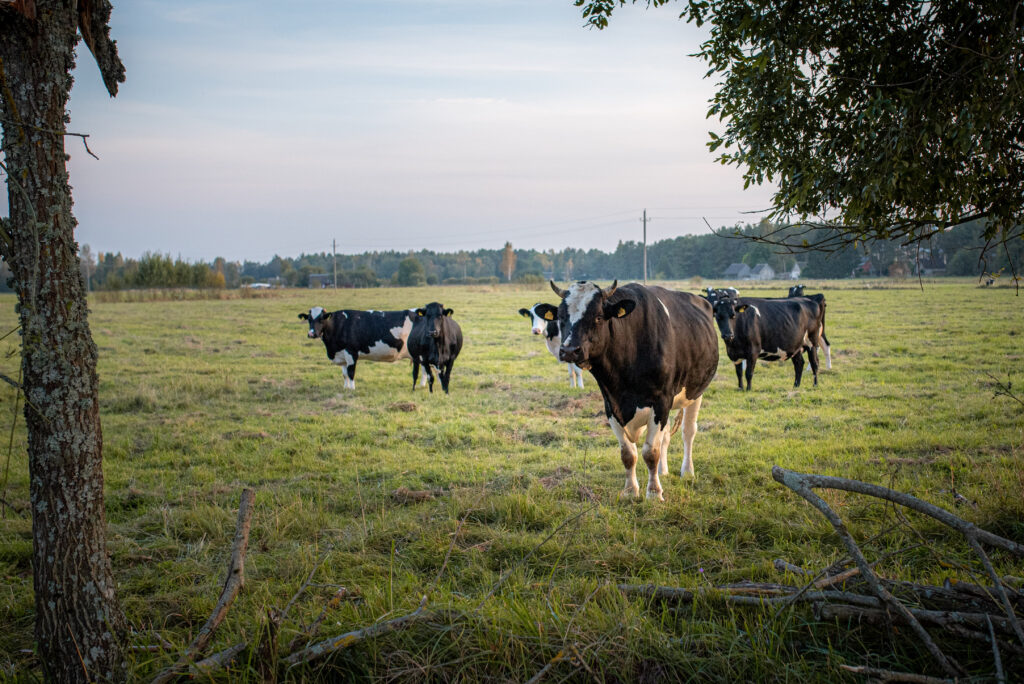
The days when cows were kept tethered are long gone. Organic cows must be able to move freely both indoors and outdoors. Their horns have been ground down for their own safety. 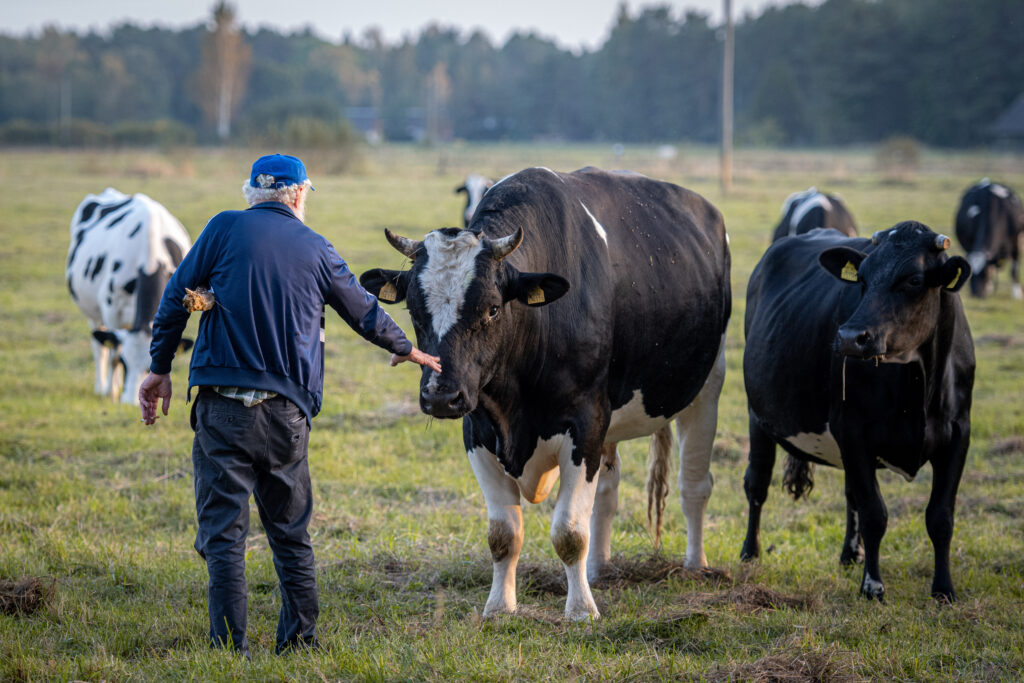
“My cows are not afraid of anyone — they are as brave as their owner!” Mati chuckles as we head to the meadow to see the animals. Here they come — a magnificent bull in front, with the cows following behind. New additions to the dairy herd are expected in October. 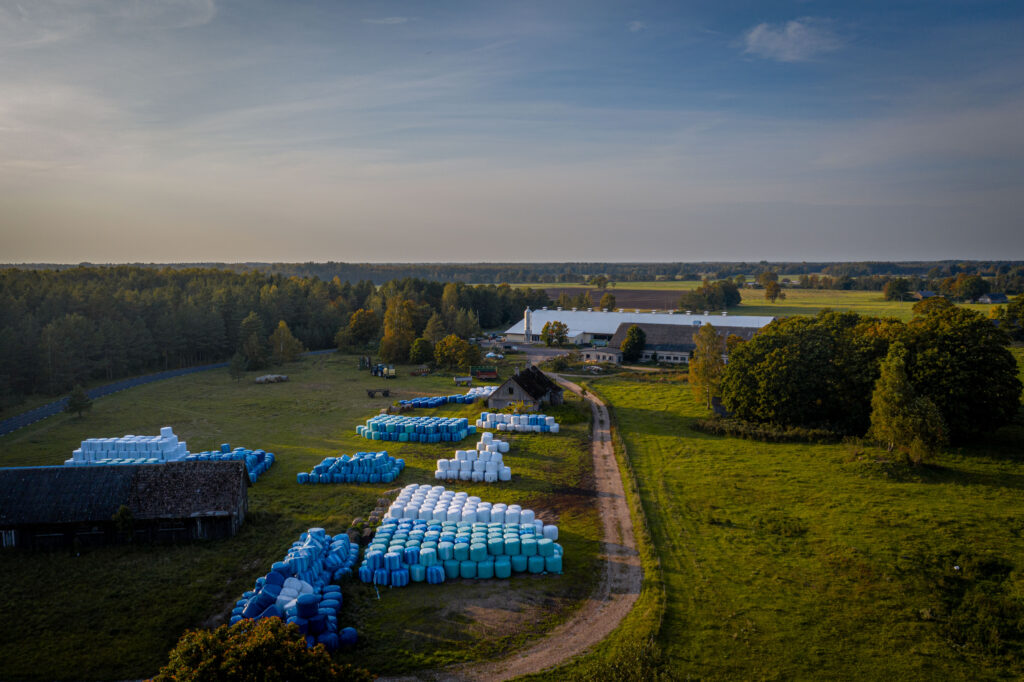
Nearly 1000 hectares of land used to raise dairy cattle and grow organic oats, rapeseed, wheat and barley 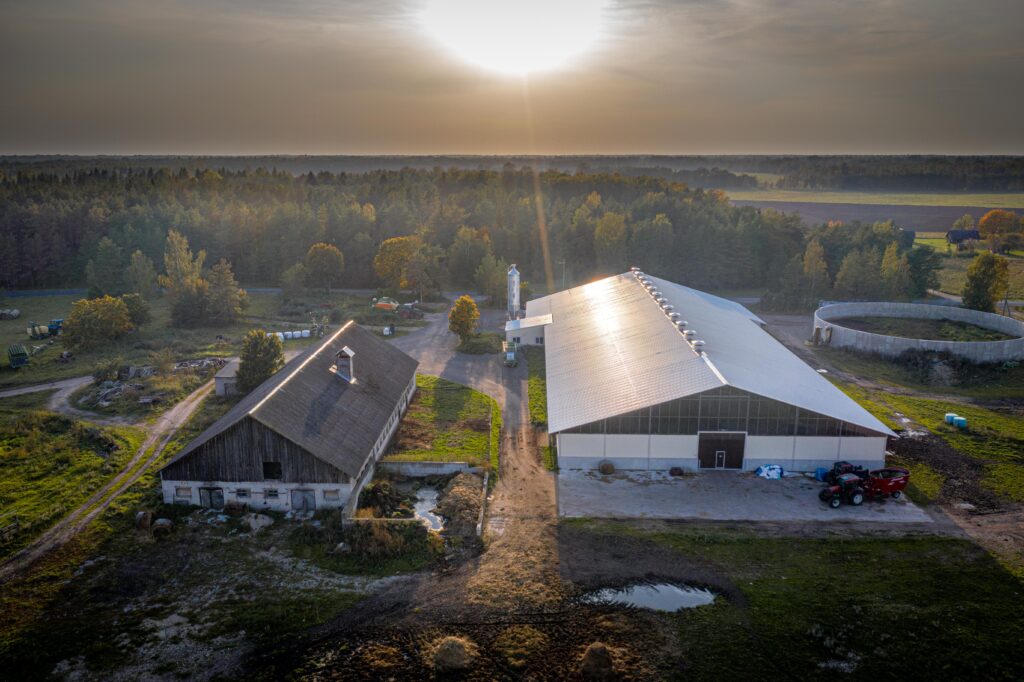
The new and old barns. On the left is the old collective-farm-era building, where Mati arrived in 1995 with 12 cows. On the right is Hiiumaa’s most modern building, currently housing an organic dairy herd of 200 head 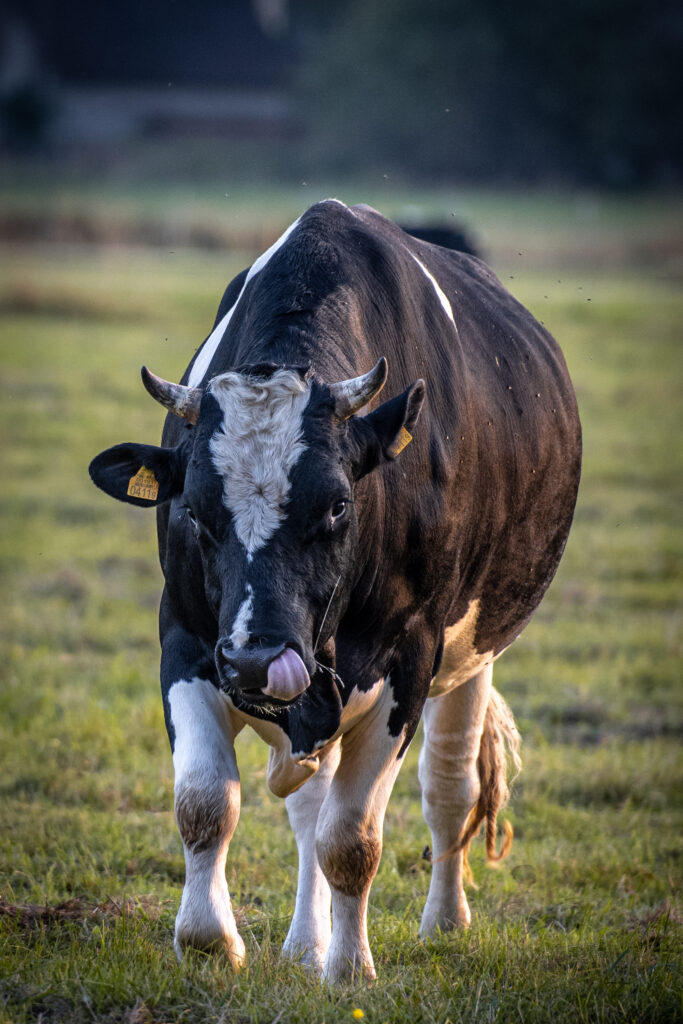
A truly magnificent bull looks after the herd and contributes to the next generation of a thriving dairy herd 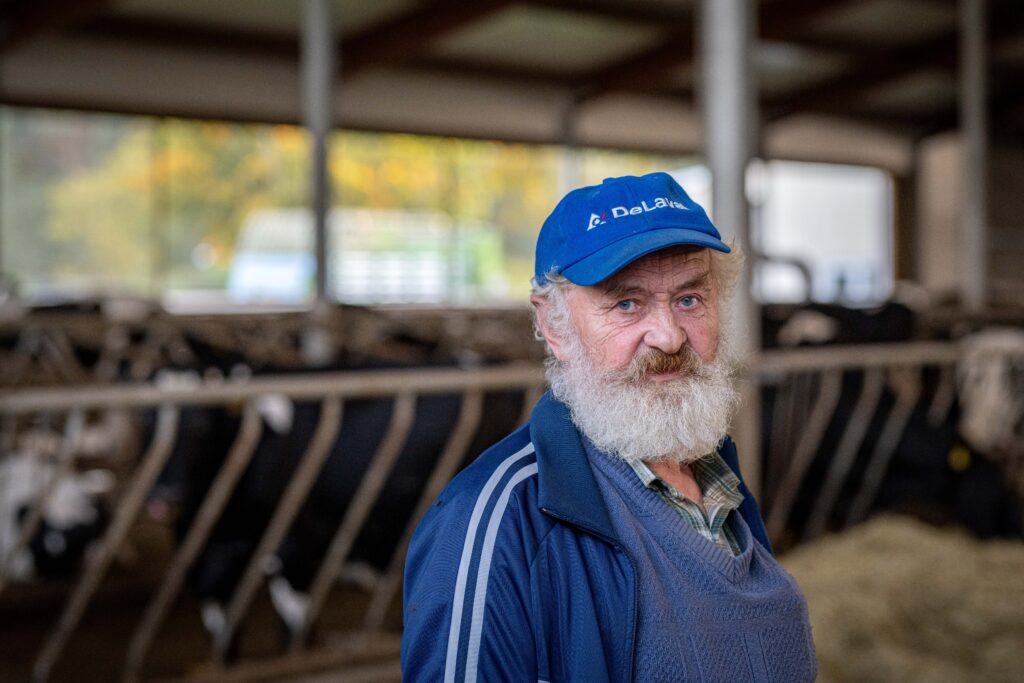
Every day, Mati goes to the barn at 4 in the morning and 4 in the afternoon to check on his herd of 200 head. Work and activity keep the 70-year-old man vital, his mind fresh and his cheeks rosy 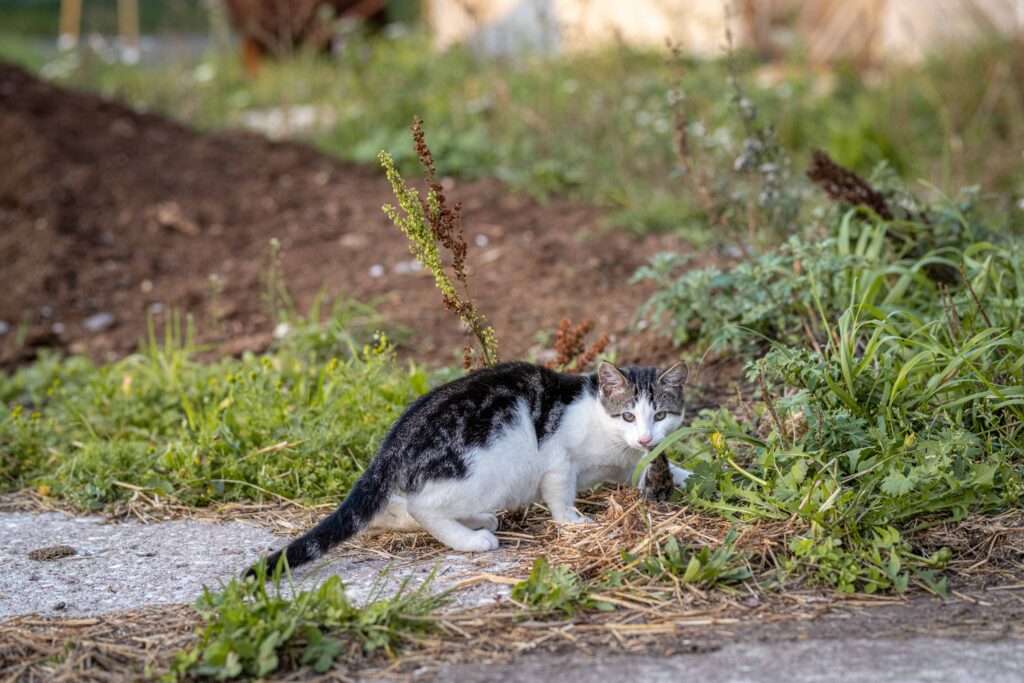
A true barn idyll: the cat has caught some fresh prey. 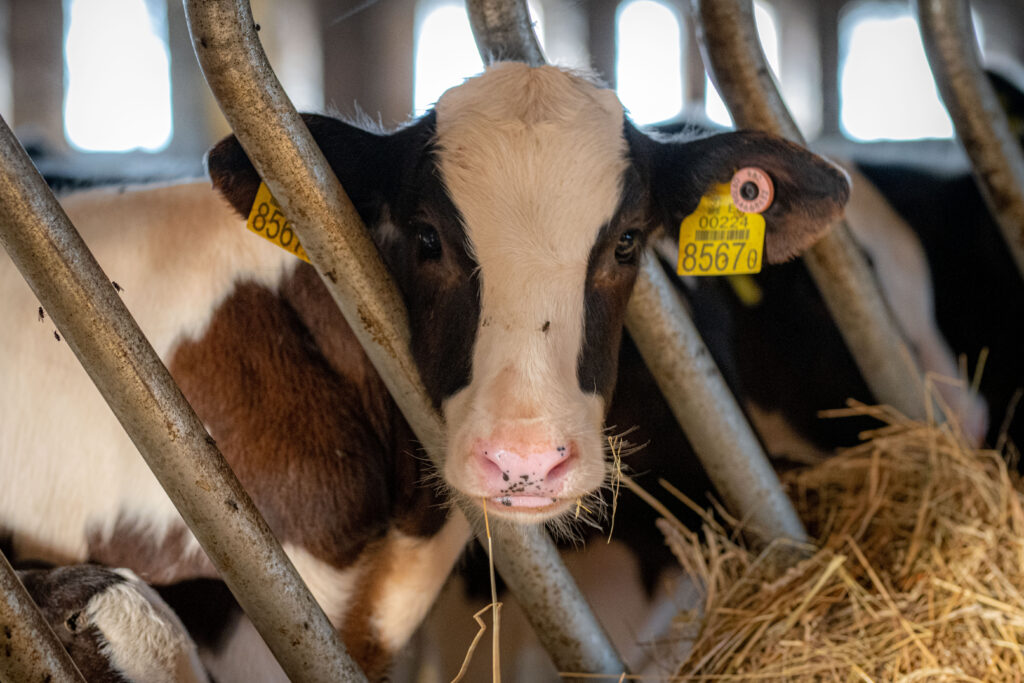
The next generation is growing up. The old barn next to the farm has been fitted out for the calves, and the young heifers feel at ease there, slipping in and out through the barn door. 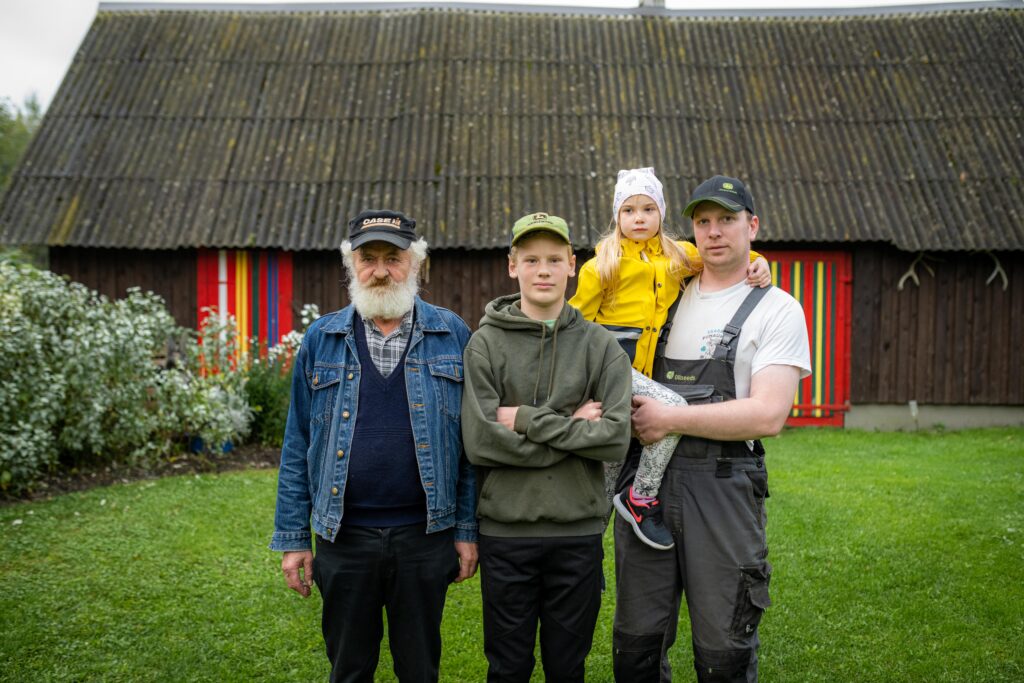
3 generations of farmers. From the left: Mati, Mikk, little Heleen and Martin. They all play an important part in running Männaka