
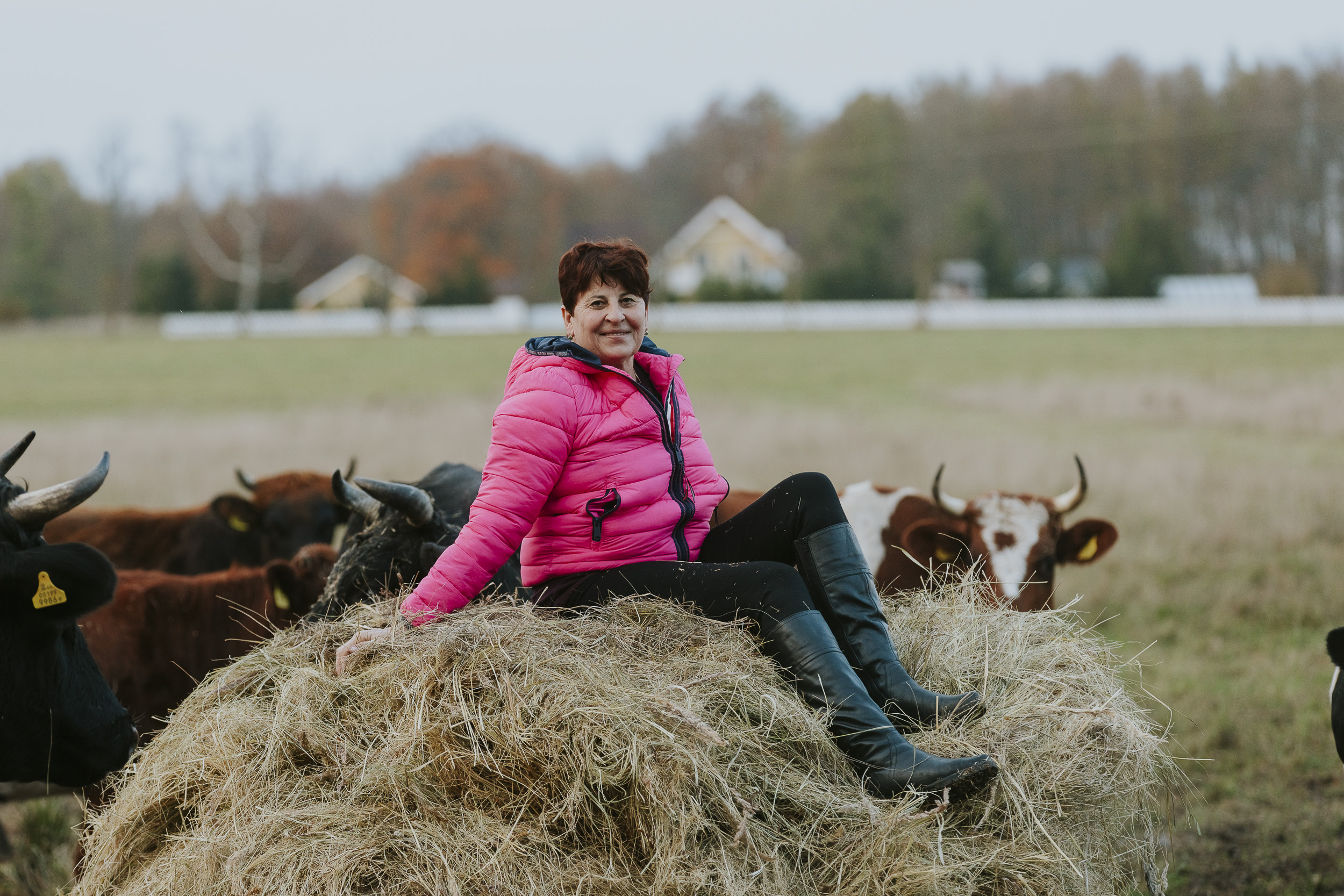
All native islanders know that Anne Tiitma, the owner of Rauniku farm in Salme municipality, has a big heart: besides her dairy herd and domestic animals, she also loves looking after wildlife, leaving hay bales in the fields for them in winter.
Rauniku farm began operating over 30 years ago, when it had only 2 cows. The family's daughter Anne tended the animals alongside her father, who ran the farm. “My father taught me how to care for animals and the art of farming in general,” she recalls. But her father died unexpectedly, leaving the young woman responsible for the entire farm. At the time, she was still working as a veterinary assistant at an agricultural cooperative. As an animal lover, Anne wanted to expand the herd.
Soon a couple of heifers joined the farm, along with horses, of course, which were used to haul manure from the cowshed to the fields. Before long, the herd had grown to 10 cows and 5 young cattle. “In 1990, I was offered the Lassi cowshed for my herd. It had stood empty for years. The larger premises gave us the opportunity to add more animals to the herd again,” the farmer explains. Today, Rauniku farm has 62 animals in its dairy herd, plus around 150 young cattle and heifers. Chickens, a few dozen sheep, three dogs and two cats also roam around the farm. Amid all her work, Anne remains sincerely grateful that her mother and partner helped her as much as they could back then; without them, she could not have devoted so much time to the animals.
Mornings in the cowshed
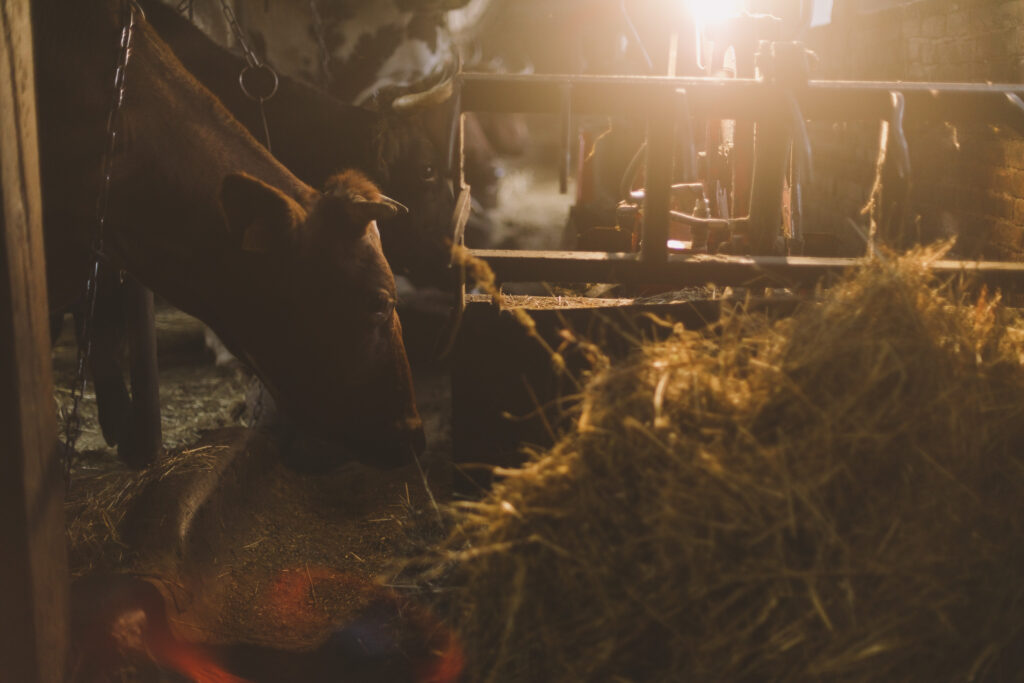
Anne's mornings begin at dawn with feeding the animals and cleaning the cowshed. Her son Indrek feeds the animals while Anne prepares for milking. Rauniku farm uses a pipeline milking system. “Milking is finished shortly after nine, and the Saaremaa Piimatööstus truck arrives by half past nine,” the farmer explains. She says Saaremaa Piimatööstus is a major supporter and driving force in the community, keeping old traditions and small farms alive.
Every other day, 1.6 tonnes of milk heads to the MoSaaremaa dairy. “Unfortunately, good pasture is hard to come by,” the farmer notes, adding that this means winter milk yields are actually higher than summer yields, as the animals receive supplementary feed when housed in the cowshed. Anne's farm is not organic, as organic grain is not easy to find. Nevertheless, she considers Saaremaa's natural environment very clean and believes this is why products made from the milk of Saaremaa farmers taste the best.
When Anne is not busy in the cowshed, you may find her out in the pasture, talking to the animals and hugging them.
Continuing family traditions
Although Anne has run Rauniku farm largely on her own all these years, this autumn her hardworking son Indrek joined her in farming after graduating in the spring from the ……… faculty of the Estonian University of Life Sciences. The family's daughter is also closely involved with animals. Gaili graduated in veterinary medicine from the Estonian University of Life Sciences and works as a veterinarian in western Saaremaa. Together with her daughter, Anne acquired a herd of purebred Galloway beef cattle, which now numbers 15 animals. Besides the family, a person doing alternative civilian service helps out on the farm. A local young man, …., also works in the cowshed every day; Anne says he is the best worker anyone could wish for.
Anne dreams of building a large new automated cowshed for the animals together with her son. Although she does not believe in milking robots and thinks human hands are still best, she feels that automated feeding would certainly bring greater freedom and comfort to both the family and the animals. In the future, Anne would like to hand over more of the management to her son. “That would leave me more time for my social life, and I could sometimes go to a café for a chat with my friends or go dancing,” she adds with a smile.
Traditions that endure
Anne Tiitma has never dreamed of a very large farm; what matters to her is that everyone is well. “For me, the most important thing is that the animals, including the domestic animals, are fed and cared for. My own home should be in good order too, and then everything is just fine,” Anne reflects, adding that it is thanks to the animals that she has a home.
The farmer worries that there are few young people in the countryside, especially those who would like to carry on the traditions established long ago. “The younger generations have become very disconnected from old traditions and do not respect this work,” she adds. That is why she takes some comfort in having passed on a love of animals to her children to a certain extent, and deep down she hopes their family traditions will continue for many generations to come. “My parents gave me a strong foundation, and I have built quite sturdy walls on it. In the future, I hope my children will add a solid roof to those walls,” says lifelong islander Anne Tiitma, sharing her dream.
Rauniku farm 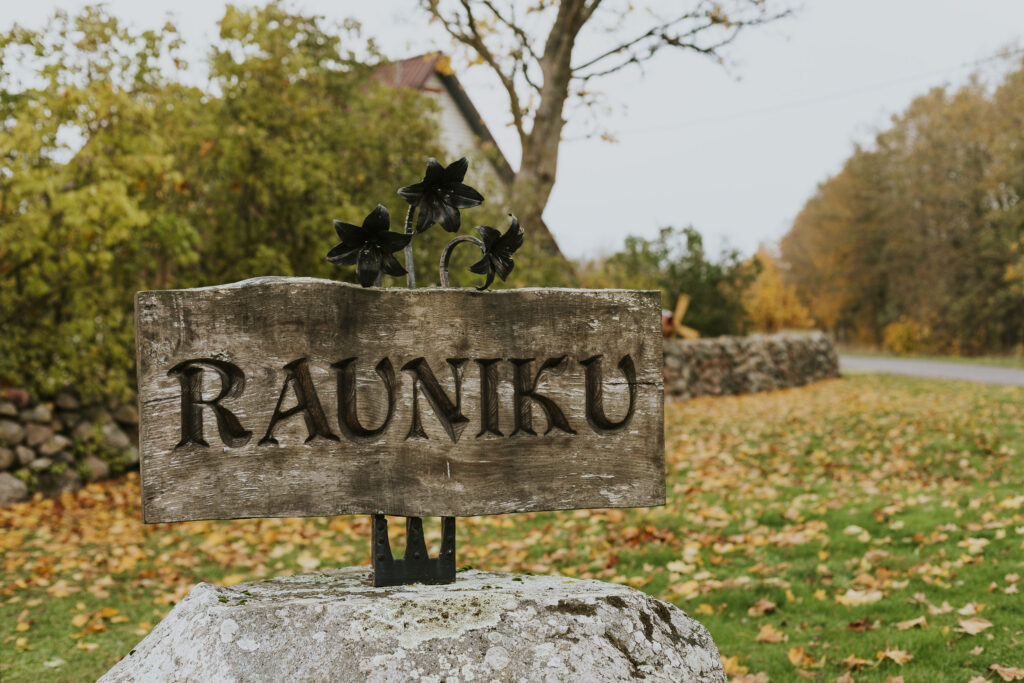
Rauniku farm 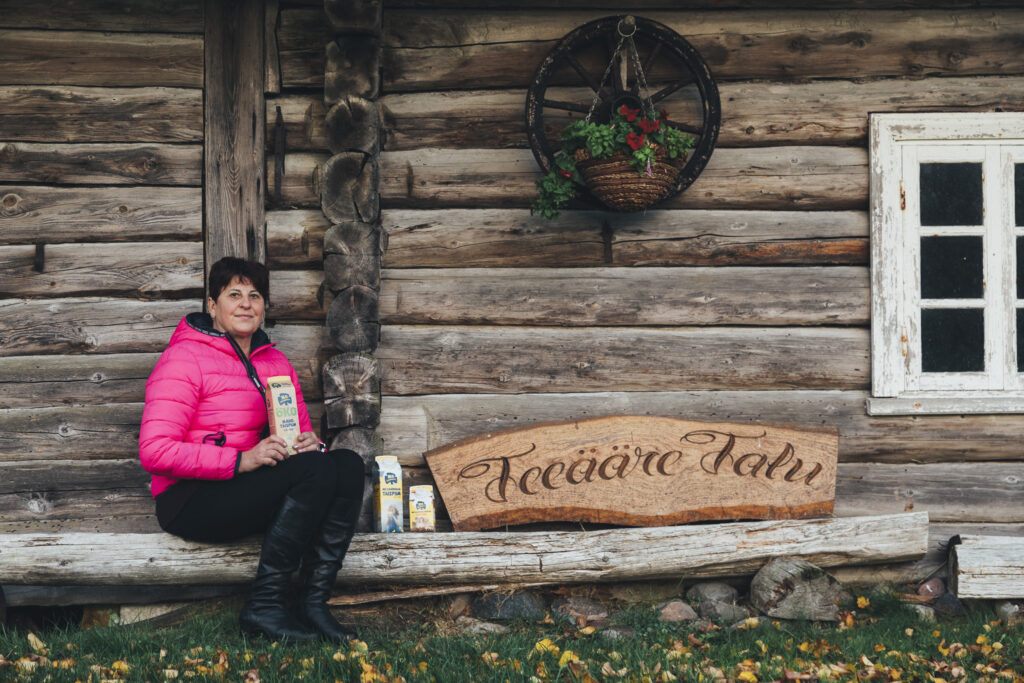
Rauniku farm 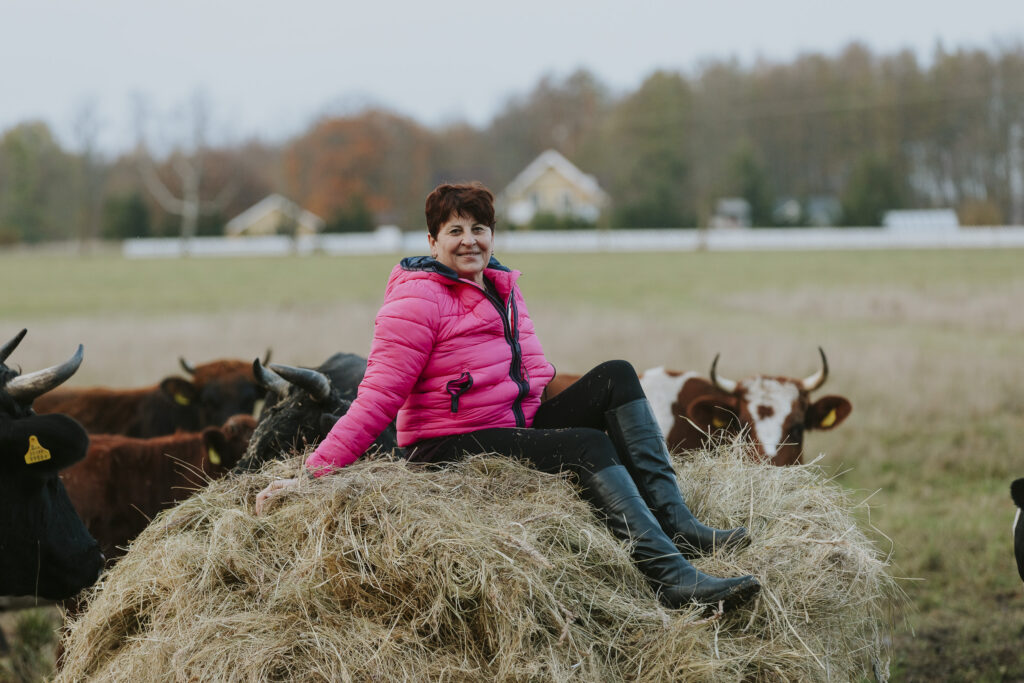
Rauniku farm 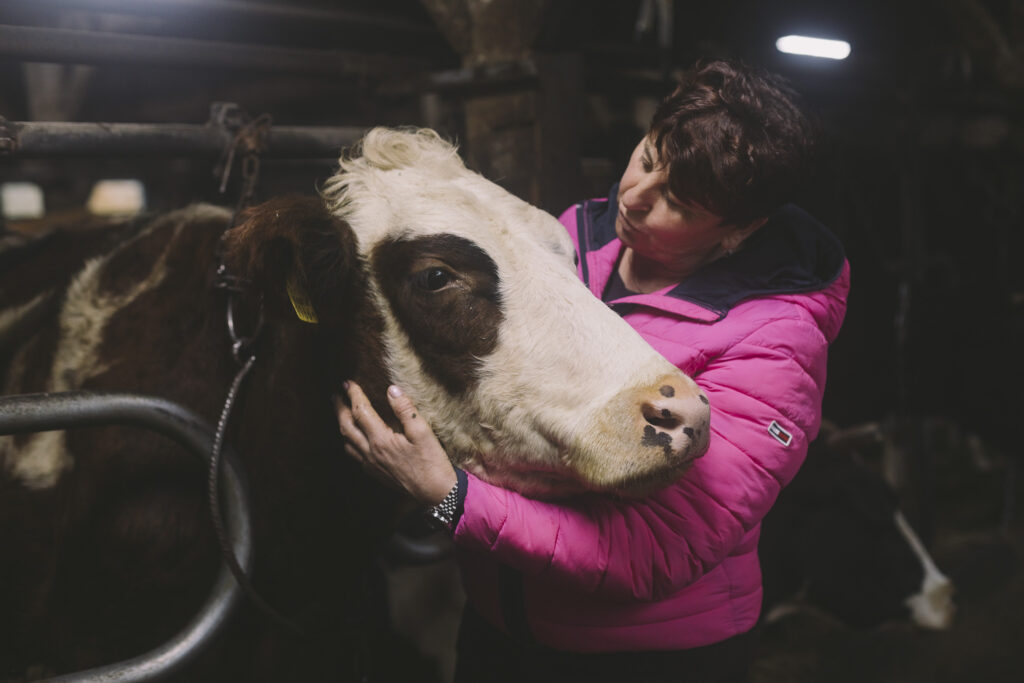
Rauniku farm 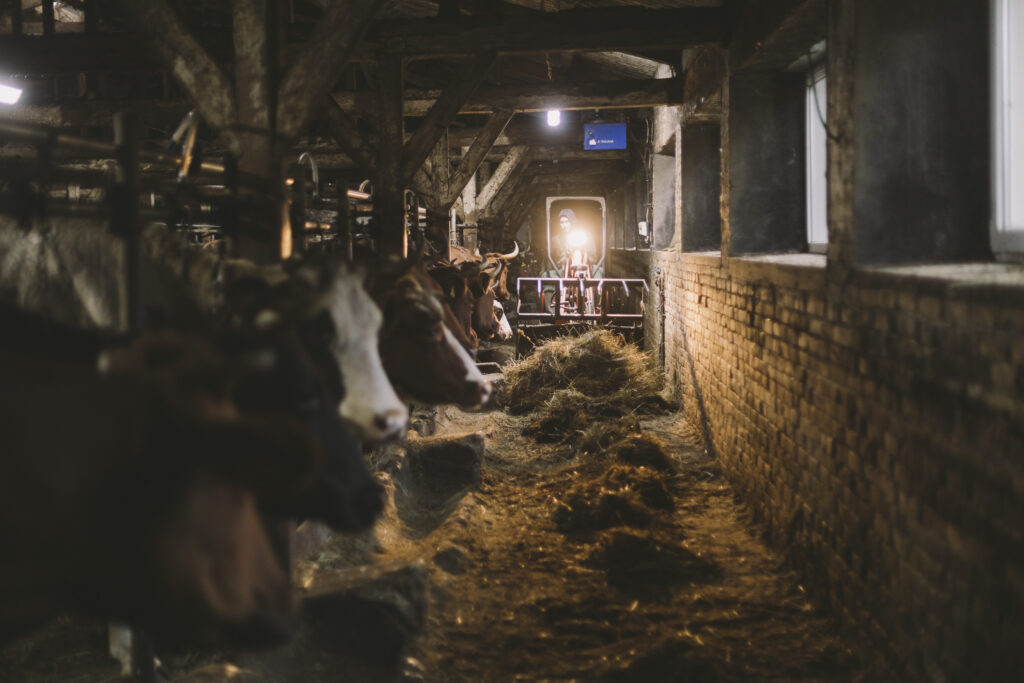
Rauniku farm 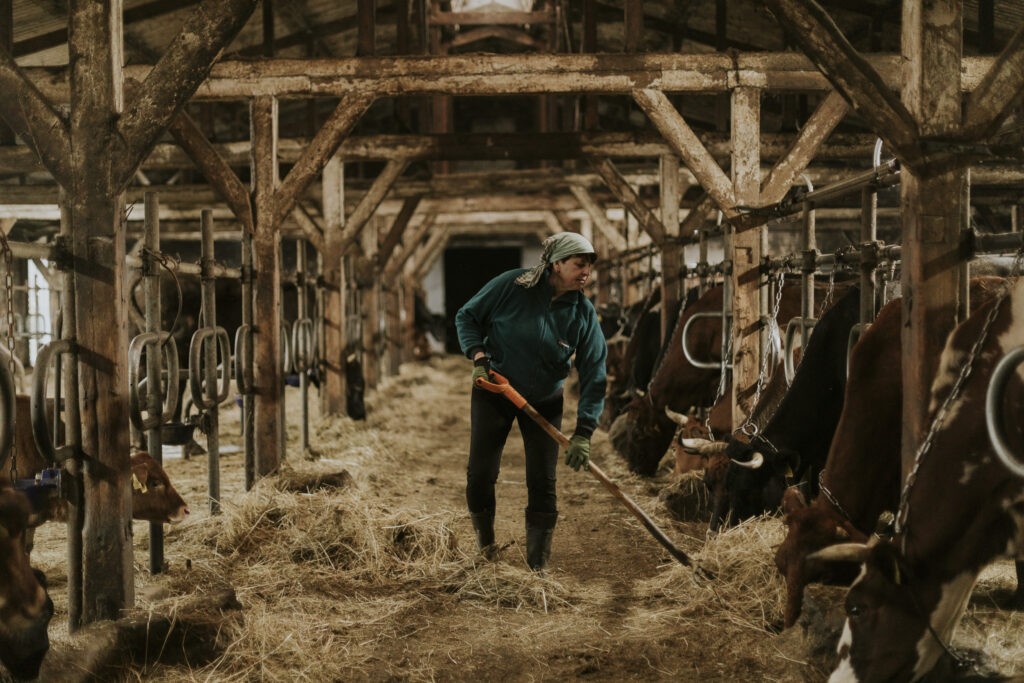
Rauniku farm 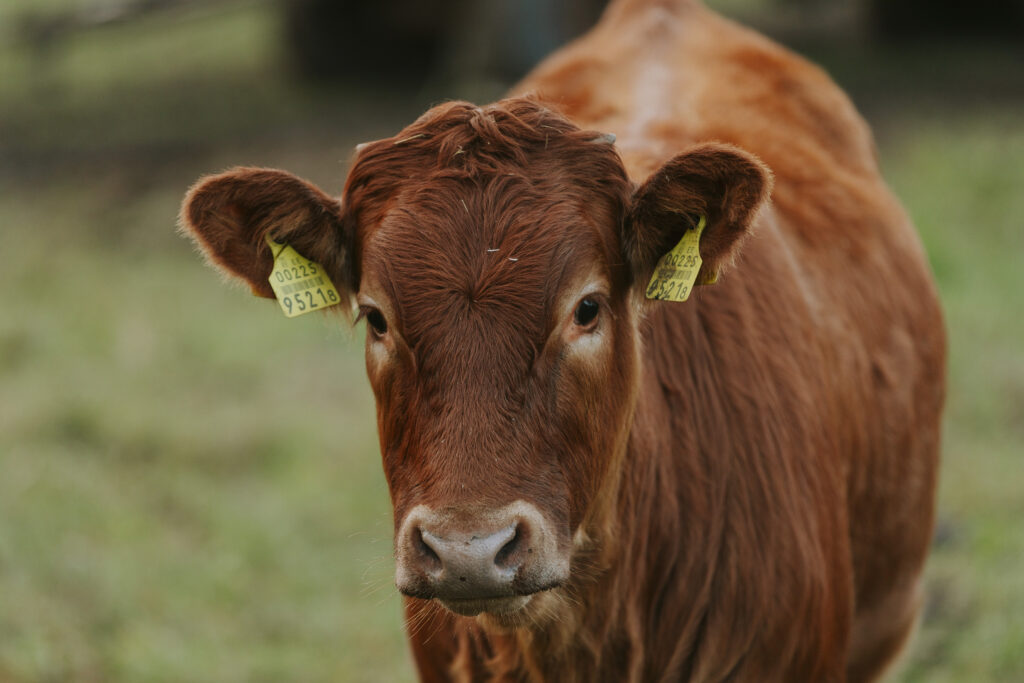
Rauniku farm 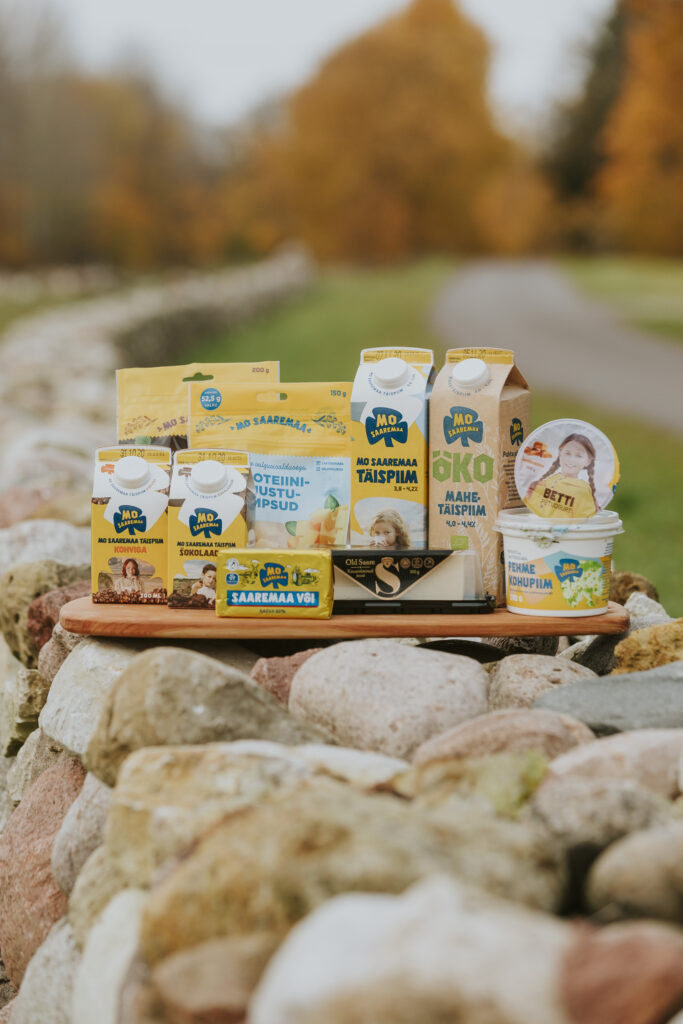
Rauniku farm